On Learning the Hard Way
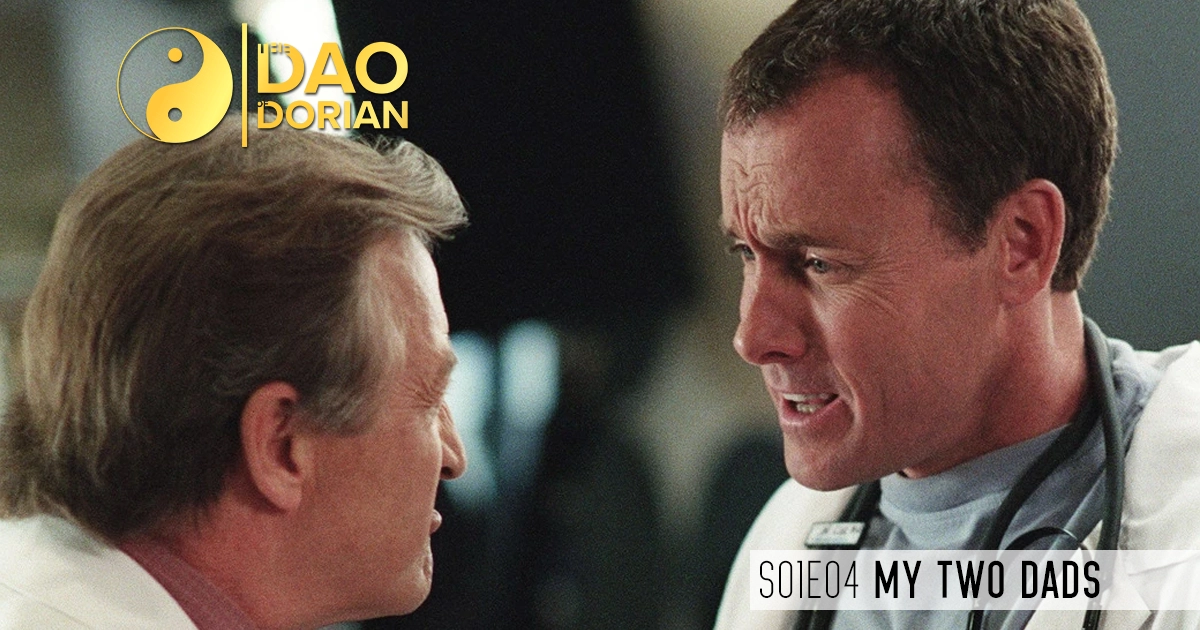
Some people fantasize about mentors the way other people fantasize about vacations. Sunlight, warm breezes, someone older and wiser gently placing a hand on your shoulder and saying something supportive. Something profound. Maybe a quote you can pretend you thought of later. John Dorian had dreams like that. He imagined a guiding figure who’d lift him up, polish his rough edges, and congratulate him on his potential.
He never imagined Perry Cox. No one imagines Perry Cox.
The truth he learned early on, the kind of truth that gets under your skin and lingers even when you wish it would leave, is that you rarely get the mentor you want. You get the one who has the courage to tell you the part you’re playing in your own problems. And the one who won’t soften the blow.
This was not a pleasant revelation for him.
J.D. wanted gentle assurance. What he got was a man who delivered criticism like oxygen. Dr. Cox handed it out freely, constantly, and with alarming accuracy. He didn’t wrap it in kindness. He didn’t slow down for feelings. He didn’t even pretend to care how it landed. He fired off the truth and walked away, usually looking disappointed in the universe for requiring his effort.
Most people would have run from that kind of mentorship. J.D. tried. More than once. But something kept pulling him back. It took him a long time to admit that the pulling wasn’t coming from Dr. Cox. It was coming from himself. There’s a strange gravity in wanting approval from someone who refuses to give it to you easily. Every harsh word becomes a challenge. Every small nod becomes a treasure. Every moment feels like an exam no one told you you’d have to take.
The lesson underneath all of that, the one hiding quietly in corners while the louder moments grab your attention, is that mentorship hurts at the beginning because you’re bumping into your own ego. Not that big loud ego people brag about. A quieter one, the kind that tells you you’re doing fine and you don’t need to change anything. A mentor breaks that version of you open. Sometimes gently, sometimes not.
John’s was the “not.”
He learned pretty quickly that being taught isn’t a warm experience. It’s more like growing pains. You’re being stretched into a shape you didn’t know you were supposed to take. Every stretch feels personal. Every correction feels like a flaw being uncovered, even when it’s not. And every time Dr. Cox pointed out a mistake, J.D. felt a sting that stayed with him long after the moment passed.
What he missed at first, and what most people miss, is that the sting isn’t meant to wound. It’s meant to wake something up. Growth doesn’t come from comfort. i comes from friction. Sometimes the person who rubs you the wrong way becomes the one who reveals the direction you’re supposed to go.
The challenge for J.D. was accepting the idea that he didn’t need a mentor who would gently guide him. He needed one who’d shove him out of his own way. Someone who would not let him hide in the safety of good intentions. Someone who would say the uncomfortable thing before he made a mistake that mattered.
Mentorship, he eventually learned, isn’t supposed to feel good right away. That part comes later. Much later. Usually after a lot of sulking.
But in the middle of all that discomfort, something else started to grow. A sort of resilience he didn’t know he had. Whenever Dr. Cox unloaded a speech so sharp it could be used to slice vegetables, J.D. survived it. He took the hit, he walked away, and he came back. Each time, the ground under him felt a little steadier.
It wasn’t confidence. Not yet. I was something smaller, something fragile. Awareness, maybe, or the sense that he could handle more than he thought. That he could be pushed without breaking. That he didn’t need to be perfect to be worth teaching.
That part surprised him.
Over time, he began to realize that behind the sarcasm and frustration, there was something real. Something almost tender, though you’d never use that word around Dr. Cox unless you wanted another diatribe. It wasn’t affection. Not exactly. It was belief. A quiet belief that he could become something better if he stopped expecting the world to reassure him all the time.
The irony is that mentors rarely admit they’re mentoring. They just do it. They toss you in the deep end and trust you’ll figure out how to swim. They challenge you because they think you can take it. They hold back praise because they know you’ll mistake it for completion.
J.D. hated that at first. He wanted milestones. He wanted stickers. He wanted someone to tell him he was on the right track. But he eventually saw that a mentor who praises too easily creates a student who stops growing. A mentor who challenges you, even to the point of irritation, creates a student who learns to rise.
Dr. Cos didn’t want a clone. He wanted a colleague. And colleagues aren’t created by comfort. They’re created by pressure.
The real shift came when J.D. stopped trying to impress Dr. Cox and started trying to meet his own expectations instead. That was when mentorship transformed from something painful into something purposeful. It stopped being about winning approval and started being about becoming competent. Becoming steady. Becoming someone who could be trusted when it mattered.
He still wanted praise, of course. He was human. But he didn’t let the lack of it dictate his value. He learned to recognize his own progress without waiting for anyone else to confirm it. That’s when the frustration softened. The lessons landed cleaner. The walls didn’t feel so high. And the silene between criticisms started to feel like respect instead of rejection.
The strange gift of mentorship is that it teaches you two things at once. First that you’re not as good as you think you are. Second, that you’re capable of becoming better than you ever imagined. It takes patience to learn the first part. It takes courage to learn the second.
In the end, the lesson J.D. carried away from those early days wasn’t about medicine at all. It was about surrendering the fantasy that growth should feel comfortable. it was about seeing the beauty in someone expecting more of you than you expect of yourself. And maybe that’s the quiet truth of mentorship: the teacher you resist the most often becomes the one who shaped you the deepest. Not because they were gentle, but because they cared enough to be honest.
Author’s Note
The Dao of Dorian comes from a place of looking for meaning in the mess. I’ve stumbled through enough chapters of my own life to know that a little humor and a little honesty can get you a long way. If this is your first stop, welcome to the ride.
Discover more from Harvey Moreno
Subscribe to get the latest posts sent to your email.